Showing posts with label life. Show all posts

Monday, May 11, 2015

Demystifying the J.D. (or, "Back in the Saddle")

After about a nine-month, hiatus, I've got a little announcement to make.  I'm back.

I had the extraordinary privilege to be graduated from the University of Nebraska College of Law on Saturday.  I think this is the part where I'm supposed to sit back and reflect on this experience, but I haven't done any serious journal-blogging for quite awhile and don't really remember how to do it.  Fortunately, I have a built-in template for this blog that should work swimmingly.

What?

Law degrees are as old as it gets in academia: the first vestiges of the juris doctorate were conferred by 11th-century glossators, schools of law that evolved into the medieval universities. *1 The latin literally means something closer to "teacher of laws," which actually tells you something about my current situation.  I am a Doctor of Laws (and an Esquire), but I am not yet an attorney ("one who is legally appointed to transact business on another's behalf") because no state has yet given me permission to handle other people's legal rights. *2 Phrased differently, I have more legal knowledge but no more legal power than my mom. *3 This is why not everyone with a J.D. actually takes the bar exam; there are an awful lot of jobs out there for which a bar certification is just superfluous.

To become an attorney, I have to pass some state's bar exam, which is typically two eight hour days in length.  To pass the bar, I'll have to study everything I learned the last few years and even learn some new material I didn't have time to cover.  Because this is America, there are half a dozen companies willing to sell you this kind of boiled-down legal education.  I'll be getting very familiar with Barbri over the next few months.

When I pass the bar (fingers crossed), the state will certify me to represent the legal rights of my clients.  As my Legal Profession professor likes to say, attorneys are "super-fiduciaries" because we are ethically disallowed from representing anybody adverse to our client.  We're exclusively indentured servants in a world of conflicting legal interests.  People go about this in ways ranging from verbal attack dog to gentle wordsmith, but the tie that binds is faithfulness to one person or group against all comers.  I did not have any real understanding of this concept when I came to law school, and I'm sure I will spend the next several decades wrapping my head around it, but I have to admit to feeling both excited and terrified to look out for people in this way.

When?

In the US, a law degree is a three-year post-undergraduate doctoral-level overly-hyphenated program.  It is sometimes combined with other degrees, like an M.B.A., M.P.H., M.D., Ph.D., or even an M.Div.  A conventional three-year program typically ends in May, and most states offer a bar exam in August and in February.  Those months are ostensibly to give people time to do all the bar prep coursework I mentioned in the last section.

Where?

Ok, I'll brag a little here.  I attended the University of Nebraska College of Law, which is ranked #56 overall and #2 in value in the United States.  The core of that value comes from Nebraska's combination of insanely talented and well-accomplished faculty and extremely reasonable tuition and fees - I would bet that my average classmate spent less than half as much on law school as they did on their undergraduate degree.  That's a really big deal, as the law school machine is notorious for trapping people in a cycle of debt, crazy jobs, and burnout.  Attending a school you can actually afford isn't just a sound financial decision: it's a good idea for personal and professional reasons, too.  I received a rigorous, well-rounded, and challenging education in my hometown of Lincoln, Nebraska, and had a lot of fun in the process.  Lincoln is blowing up right now, and while I'll be sad to leave it behind I'm excited about my next opportunity (stay tuned).

Who?

I was definitely surprised by the academic diversity of my law school class, but I probably shouldn't have been.  Of course, you run into plenty of political science, history, or English majors, but you'll also find an awful lot of people who studied anthropology, biology, chemistry, divinity, engineering, finance, German, humanities, international affairs, journalism, kinesiology (ok...I'm stretching), linguistics, music, nursing - you get the idea.  The unifying factor is that everybody at this level did something well at an undergraduate institution and/or a career: how you did means much more to law school admissions folks than what you did.

This is "how, not what" mentality is reflected in the LSAT, the standardized test the schools use to rank their applicants.  There is not one iota of substantive knowledge you need to bring into that test, unless you count the English language: unlike other exams, it is purpose-built to test your aptitude to apply the information they give you accurately and efficiently.  This means that anyone with the desire and ability to learn quickly can theoretically be a great lawyer.

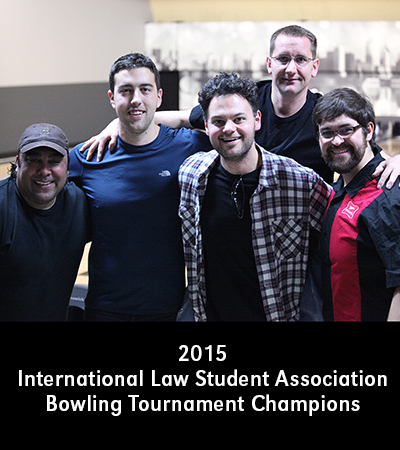
Love you guys. Also, I was serious - undergrad majors from left
to right: biology, finance, political science, nursing, music.
I was also surprised by the character, humor, and camaraderie I found among my classmates.  I was proud to stand beside them as I received my diploma, and I look forward to watching them become leaders in the legal profession and society in general.  If lawyers turn out to be rotten people, they certainly do not start that way.
How?

There are basically three camps of "lawyers:" non-attorneys, transactional attorneys, and litigation attorneys.  These people use their degrees in very different ways.

What I'm calling non-attorney lawyers are those who use their J.D. but lack or don't use their bar certification.  These folks might be in anything from management to ministry, jobs that are sometimes called "J.D. Advantage" (rather than J.D. Required).  These folks do not technically practice law, but they find ways to apply the skills and knowledge they pick up in law school.

Transactional attorneys are those who use both a J.D. and a bar certification but do not handle civil or criminal lawsuits.  They draft contracts, keep folks updated on changing law, handle regulatory compliance, and perform other non-adversarial functions.  Actually, you could call them anti-adversarial functions: a good transactional attorney adds value by saving her clients future legal fees by avoiding litigation.  The stereotypical transactional attorney spends most of his time writing, but verbal communication within or between organizations can also be crucial skills.

Litigation attorneys are what most people probably think of as the prototypical lawyer: the folks who defend or prosecute their clients' interests in civil or criminal lawsuits.  I can't find any good figures at the moment, but my understanding is that these folks are actually well in the minority compared to non-attorneys and transactional attorneys.  This is the anywhere, anytime job in the legal profession: hours are long and variable in courtrooms, law offices, police stations, prisons, and just about anywhere in between.  Litigators use their degree to draft motions and correspondence, conduct discovery, and speak in court.

Importantly, these are not mutually exclusive categories: some (if not most) attorneys cross between them on a daily basis.  The employers are also widely varied - companies, law firms, individual clients (for the solo practitioner), governmental entities, agencies, private institutions, non-profits, and the list goes on.

Why?

We have a problem in this society.  Believe it or not, lawyers are the solution.

On the one hand, everybody is bound by the law.  The only way to keep the rules relevant is to enforce them.  Everybody therefore theoretically needs to know the law so they can know how to avoid breaking it, or how to seek justice when somebody else breaks it.  We also have rules about how we enforce the rules (things like civil or criminal procedure and evidence), and everybody needs to know those rules in order to ensure they get a fair shot in court.

On the other hand, we don't have time for everybody to go to law school.  Trust me.  As a society, we need the vast majority of people to do something else - grow food, fly airplanes, perform surgery, teach children, etc.  Unfortunately, all those people are still governed by the rules because they have the capacity to put other people at risk every time they fertilize, pilot, suture, or even speak.  Some people choose to take their legal rights in their own hands (called "pro se" representation), but this is generally a bad idea even for lawyers because the emotion and passion that comes in trying to vindicate oneself can be blinding even if you have the knowledge.  As one potent potable puts it, "a pro se litigator has a fool for a client."

This is where attorneys come in: we're on-call advisers who dispassionately distill the law down into what a client needs to know, when they need to know it.  My favorite explanation is simple: look the client in the eye and explain why "if you knew what the law says you're supposed to know, you'd do X."  For some clients, that advice is all they seek.  If they want to give us the discretion to act accordingly on their behalf, they can, but that is their choice because it is their life, freedom, or stuff on the line.  In that way, it's not terribly different from medicine: you're perfectly within your rights to remove your own appendix, but it's generally advisable to get some help.

That's it.

I'll still be busy this summer, but I'll be firing up your regularly scheduled programming next week.  Watch for weekly-ish articles, and keep up with me on Twitter or Facebook.  'Til then!


--
*1: A History of the University in Europe: Volume 1, Universities in the Middle Ages, Cambridge University Press, 1992, ISBN 0-521-36105-2. Wikipedia.
*2: Webster.
*3: Happy Mother's day!

Thursday, June 5, 2014

What's In a (Tail) Number?

If you speak Spanish, or any number of other languages, you may know that the English "my name is X" doesn't always directly translate.  Those languages say "I call myself X," and while the difference is subtle it really affects the way you think about your moniker.  The English is passive; we call our first names "given" and our last names "family," meaning we have little to do with the naming.  The Spanish is active; I call myself something every day, and others share in that activity with me.

"Lincoln ground, Cherokee 8619E."

I'll never forget the first time I said that sentence.  I had a new label, but it was more than that.  It was a new way of calling myself - a new way to tell others who and what I was, but also to tell myself.  It was like the first time a coach called my by my last name when I started playing football or the first time I called myself by my job title, but it didn't just add to my name.  It replaced it.

Harrison Ford talks about this anonymity in the "Just Another Pilot" video I recently wrote about.  He talks about the release he feels knowing he's identified as the pilot of a Beaver rather than a Millennium Falcon, and it frees him to experience the world in a completely different way.  While not all of us need to escape our celebrity status to relax, I think most of us do take some solace in hiding behind the microphone.

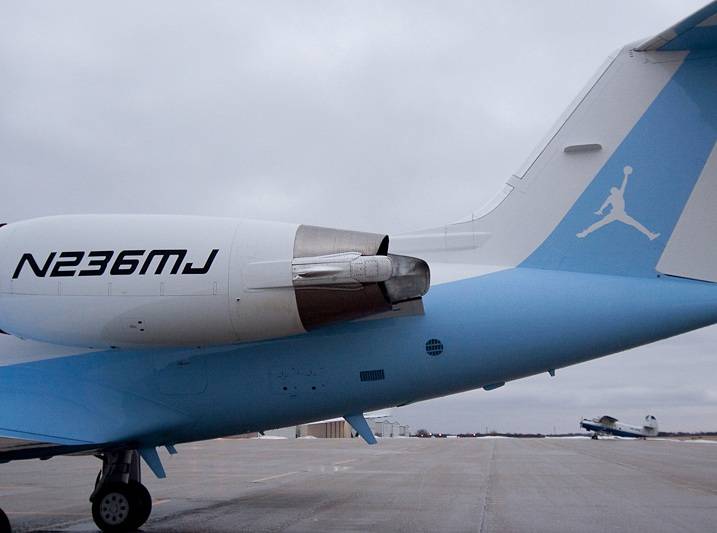
Michael Jordan: #23, 6 NBA Championship Rings.
Of course, you can always customize your N-number (within some pretty specific FAR limits) if you'd rather broadcast your identity to the world.  Actually, at $10, it's a better deal than the vanity plates in my home state.  Passengers out there, have you ever wondered why so you hear so many "November"s over the radio on cross-country trips?* ID numbers on every plane registered in the US must begin with "N" by law - every from Guernsey to South Africa has a similar international identifier.  There are plenty of vanities already registered (N1KE, N32MJ, and N236MJ, among others) so jump on it if you're too good for Harrison Ford.

Since 99% of us aren't too good for Harrison Ford, we'll continue to experience the thrill of learning new ways to call ourselves every time we hop behind a new yoke.  Language is strongly linked to memory, and self-recognition to autobiographical memory in particular.  To come full circle, these letters and numbers we use to steer clear of traffic in the sky become a deeply integrated part of how we perceive ourselves as pilots.  A passenger once told me that she had trouble picking out our call sign among all the ATC jargon in the sky, and I realized that what sounded to her like gibberish has begun to sound to me like poetry.

--

*A recent passenger, who shall remain anonymous, actually asked this on my last trip.


Thursday, May 29, 2014

Tradition

I was listening to an interview the other day with the man responsible for the lyrics in Fiddler On The Roof, which happens to be celebrating its 50 year anniversary.  He spoke about many interesting facets of the show, but I thought the most interesting few minutes were about the songs they didn't end up using, including the original opening number.
"It wasn't used because when Jerome Robbins became our director, we had many, many meetings before we went on to rehearsal. At each meeting he started with the same question: what is this show about? And he would say there's something that gives this show its power and we don't know what it is. And finally at one of those meetings one of us said hey, you know what this show is about? It's about changing of the way of life of a people in these Eastern European communities, these little towns, these shtetls, and Robbins got very excited about that. He said if that's the case, then what you have to write is a number about traditions, because we're going to see those traditions change. And that's so important in the show. Every scene or every other scene will be about whether a tradition changes or whether it remains the same. So instead of a song with the mother and the daughters getting ready for the Sabbath, he wanted us to write a song about tradition because he thought that's what the show is really about."

This weekend I had the chance to visit my fiancĂ©'s family cabin for Memorial Day weekend.  If you grew up somewhere other than the Northwoods (like I did), you may not understand the traditional significance of that holiday in that part of the world.  It's the unofficial start of summer, and it's easy to see just how widespread that celebration is when you're actually there.  Towns double in size, boat engines roar to life for the first time in months, and spirits are high.  These folks are creatures of habit in a strange but endearing way.

While I did grow up as a creature of the plains, I was extremely fortunate to have experienced aviation from an early age through the pilots God gave me for a father and grandfather.  I've heard it said that there are ultimately only old pilots and bold pilots, and becoming a third-generation old pilot is definitely a tradition I aim to honor.

My future grandmother in law sees us off
This weekend, our family traditions collided when I flew that rental Archer up to D25.  It's a marvelous little airport if you ever have the chance to visit.  I had the opportunity to take my future father in law and grandfather in law up for a little aerial tour of the area they've been frequenting for decades by car, and it was an experience I will absolutely never forget.

I think we as general aviators know Tevye's love for tradition as well as anyone.  Our planes are, on average, over 40 years old.  At our best, we rely on checklists and procedures to give our flights a firm foundation.  At our worst, we get stuck longing for the golden age of aviation to return without actually getting off our rears and doing what we can about it, and I think that's the side that concerns me.  If you haven't seen Fiddler, watched the above clip, or heard of the concept of foreshadowing, here's a little spoiler alert: in the end, Tevye's traditions can't save his village from the sweeping societal changes knocking at his door.  Its residents are eventually forced to adapt, but one can only imagine how much more difficult that integration was as a result of their longtime resistance.  On the one hand, they experienced a life very few others around the world were able to perceive.  On the other, that same world left them in the dust.

So what's it going to be?  Will we continue to lose 10,000 private pilots per year, dump lead into the atmosphere out of Metathesiophobia, or resist technological changes that will increase situational awareness for every pilot? Or will we honor our collective heritage by embracing the future with all its costs and benefits, and make of it what we can?

Let's choose the latter.  Let's honor our collective heritage of innovation and responsibility that has made aviation great. Let's fly.

Thursday, May 22, 2014

Freedom and Responsibility

If you've never seen this video, do yourself a favor and watch it.  The actual interview starts at :40.


A very experienced GA pilot first shared this with me long before I had my own wings, and it's stuck with me.  I love Harrison as an actor, but I think I appreciate his words in this little clip more than any of his many films.  His story of becoming a pilot is probably different from most, but nevertheless relatable.  He exhibits the drive that makes any good pilot good: a desire to constantly improve and broaden his abilities.  He's lucky enough to fly for fun, but many would see him as even luckier for being able to incorporate GA into his non-aviation career.  In any case, he humbly recognizes that luck for what it is.  He is almost shockingly humble about his success, which makes you want to empathize with rather than mock his failings - you can't help but laugh along when you visualize his first solo (3:44).  His appreciation for small towns and small-town people also reflects one of the beautiful aspects of GA.  Even having grown up in a state with more cows than people, hopping into a little local airport feels to me like stepping back to a simpler era built on history and mutual trust.

What I really love about this video is when Harrison talks about why he flies.  Ask any pilot to do the same and freedom will be high the list (if they're honest); nobody gets into this because it's cheaper or safer than other modes of transportation.  But it is the mixture of freedom and responsibility (5:08) that fuels the adrenalin from takeoff to touchdown.  We pay dearly for the opportunity to launch into the sky, but that makes us value every second.  We take our lives (and those of our passengers) into our hands every time we line up on the numbers, but the gravity of that situation heightens our senses.  I think overcoming both of these hurdles is what makes us not only glad but proud to fly, and keeps us coming back for more.

Saturday, May 17, 2014

Determination

What is it about the sky that makes us wonder?  Its blueness?  Its vastness?  Its usefulness or mystery or distance from home?  Whatever it is, we seem to keep our necks craned and our eyes wide.

I was walking around my grandparents' place the other morning, trying to identify the low-and-slow a few thousand feet above my head, when my eye caught something odd.

I'm no botanical expert, but I know one thing about that tree: it couldn't thrive in the space it was placed.  Maybe it had a biological issue within itself.  Maybe there was an environmental obstacle, or maybe some other plant grew in to block its place.  By whatever method, nature blocked the conventional route - but that tree wanted to go up, and it found a way.

I think this tree embodies the spirit of aviation both historically and today.  Humans found themselves shackled to the ground they walked on until they realized they could make vehicles that skidded or rolled.  Then they realized they could make their vehicles float and opened up a whole new world of discovery, but even once they discovered ways to penetrate the sky I believe they've never stopped looking up.  They probably never will.  At our roots we are firmly in the dust, and to dust we will return, but we will stretch upward and outward until that day comes.

Today, pilots find themselves simultaneously creating new ways to reach the heavens and dealing with new hurdles that try to keep them on the ground.  For some, it may be excessive regulation.  For others, personal health.  Maybe it's the financial burden, or the risk flying places on life itself.  But like that tree, we find a way.  We adapt, and grow, and find a way to be further into the air than we were yesterday.